
News
2026 FSOMS Legislative Report from Gray Robinson
TO: FSOMS Members
Lawmakers ended the 2026 Regular Session on Friday, March 13th, without passing a Budget for the second year in a row. Of the 1,896 bills filed, 237 bills passed and will be (or have been) sent to Gov. Ron DeSantis for his approval or veto, including several approved during a flurry of activity during the final week as Session wound down. But another central issue for Republican leaders and the governor – what to do about property taxes – remains outstanding.
Senate President Ben Albritton, noted that property tax relief will be addressed during the upcoming special session, along with efforts to close out the budget. “With affordability top of mind for Florida families, Senators will return to Tallahassee to put a meaningful option for property tax relief on the ballot for the fall election.” President Albritton indicated the intent is to return mid-April, following the Easter and Passover Holidays. Legislators were already expected to return to the Capitol the week of April 20th for a Special Session called by the Governor to redraw congressional districts following population changes since the 2020 U.S. Census. Governor DeSantis issued the proclamation back in January in response to President Trump’s call for mid-decade redistricting but delayed the Special Session until April in hope that a Louisiana Supreme Court case, which could potentially dismantle minority access districts, would be decided by then. To date, the court has yet to issue a ruling.
In the meantime, Senate and House Presiding Officers and Budget Chairmen are continuing to try to work out topline budget numbers—the so-called “allocations” for how much lawmakers will allot to different parts of the budget, which must be agreed upon before the Legislature can conduct conference committee meetings to bridge the gap between the two chambers’ spending plans. In addition to big-picture spending decisions, budget writers will decide the fate of individual member project funding requests. As of the final day of the regular session, House and Senate spending plans remained roughly $1.4 billion apart.
Because the Legislature adjourned Sine-Die, all bills which did not pass during the 60-day Session automatically die – including the Budget and Conforming Bills. As such, from a procedural standpoint, both chambers must start the budget process from scratch, including subcommittee meetings offering spreadsheets, full passage by the Appropriations Committee, then on to the floor again for debate and a vote by the full body – at that point, they can then enter into conference negotiations. There is nothing that would prohibit them from using the previously proposed budget bills as their base starting point, but we would anticipate they will not call the Special Session until there is an allocation agreement, so some initial changes in the spending plans may be forthcoming. The new fiscal year begins July 1, so it is possible – though not ideal – that the legislature could continue to delay the call for Special Session. It is also possible that additional policy issues which didn’t make the cut during the regular Session will be included in the call. We will continue to keep you updated as additional information becomes available.
Attached is your Bill Report, which now includes final legislative actions (ordered enrolled or died). We have included one which details all bills which we were tracking on your behalf, and a separate report which details only the enrolled bills. As more of these bills are presented to the Governor over the next several weeks – or months – the last action for the enrolled bills will be updated accordingly in our future bill reports. Additionally, for your reference, we have included a report listing all 237 bills which passed this year.
In the meantime, if you have any questions, or would like any additional information, please do not hesitate to reach out to us. As always, we thank you for your continued trust and confidence in our team!
2025 Annual Meeting Recap
Dear FSOMS Members,
Thank you to everyone who joined us for the 2025 FSOMS Annual Meeting, held October 24–26 at the Waldorf Astoria Orlando. The weekend was a tremendous success, bringing together oral and maxillofacial surgeons from across Florida for outstanding education, meaningful connections, and important Society business.
Read more >>>
Governor Ron DeSantis Appoints Drs. Brad Cherry and Chad Marshall to the Board of Dentistry
Governor Ron DeSantis announced the appointment of two OMSs, along with seven others to the Board of Dentistry. Dr. Brad Cherry, who was reappointed, and Dr. Chad Marshall joined new appointees Marc Anderson, Andrew Forrest, Jessica Stilley-Mallah, and Elizabeth Traverso and the reappointments Karyn Hill, Angela Johnson, and Nicholas White.
Marc Anderson, DMD
Anderson is the Dentist at Anderson Dental. He currently serves in the Florida Army National Guard and previously served in the United States Air Force. Anderson earned his bachelor’s degree in biology from the University of California, Los Angeles, his Doctor of Dental Medicine degree from the University of Southern California, and is currently working towards his juris doctor from the University of New Hampshire.
Andrew Forrest, DMD
Forrest is the Founder and Clinical Director of Orange Park Dental Partners. He previously served as a faculty reviewer for the Periodontics Chapter in the McGraw-Hill Clinical Dentistry textbook and retains a teaching appointment as a Clinical Assistant Professor for the University of Florida’s Department of Periodontics. Forrest earned his master’s degree in oral immunology from the University of Florida and his Doctor of Dental Medicine degree from the University of Miami.
Dr. Chadwick Marshall
Dr. Mashall is the Owner and Surgeon at Chadwick J. Marshall Oral & Maxillofacial Surgery. Active in his community, he is a board member and former President of the Florida Society of Oral and Maxillofacial Surgery and the Okaloosa-Walton Dental Society. Dr. Marshall earned his bachelor’s degree in biology from Florida State University and his Doctor of Dental Medicine and Doctor of Medicine degrees from the University of Florida.
Jessica Stilley-Mallah, DMD
Stilley-Mallah is a Periodontist for the Periodontal Health Center in Tampa. Active in her community, she is a member of the American Dental Association Dental Content Committee and previously served as the President of the West Coast District Dental Association. Stilley-Mallah earned her bachelor’s degree in psychology from the University of Florida, her master’s degree in oral biology from The Ohio State University, and her Doctor of Dental Medicine degree from the University of Florida.
Elizabeth Traverso
Traverso is an Assistant State Attorney for the Sixth Judicial Circuit. Active in her community, she was the recipient of the 2022 Prosecutor of the Year Award from the Suncoast Police Benevolent Association for her work on prosecuting gang cases. Traverso earned her bachelor’s degree from the University of Central Florida and her juris doctor from the University of Florida.
Dr. Bradley Cherry
Dr. Cherry is the Owner and Surgeon at Bradley A. Cherry Oral & Maxillofacial Surgery. Active in his community, he is a member of the Florida and American Association of Oral and Maxillofacial Surgeons, the Academy of Osseointegration, and the International Congress of Oral Implants. Dr. Cherry earned his bachelor’s degree from the University of Virginia, his master’s degree from the College of William & Mary, his Doctor of Dental Medicine degree from Virginia Commonwealth University, and his Doctor of Medicine degree from the University of Florida.
Karyn Hill
Hill is a self-employed Dental Hygienist Consultant and Chief Examiner for the American Board of Dental Examiners. She is currently appointed as the American Board of Dental Examiners Dental Hygiene Chair for the United States and serves on the American Board of Dental Examiners Appeals Committee and Discipline and Grievance Committee. Hill earned her associate degree in dental hygiene from Palm Beach State College and her bachelor’s degree in oral health promotion from O’Hehir University.
Angela Johnson
Johnson is a Registered Dental Hygienist for D. Mark Volteral’s Dental Office in DeLand. Active in her community, she serves as a member of the Victoria Gardens Women’s Club and the American Dental Hygiene Association. Johnson earned her associate degree in dental hygiene from Florida State College at Jacksonville.
Nicholas White, DMD
White is a Pediatric Dentist at Nicholas A. White, DMD, P.A. Active in his community, he is a member of the American Dental Association, the American and Florida Academies of Pediatric Dentistry, and the Southeastern Society of Pediatric Dentistry. White earned his bachelor’s degree in health sciences from the University of Nevada and his Doctor of Dental Medicine degree from the University of Florida.
These appointments are subject to confirmation by the Florida Senate.
2025-26 AAOMS Officers & Trustees Announced
FSOMS Member Dr. Dan Gesek Elected District III Trustee
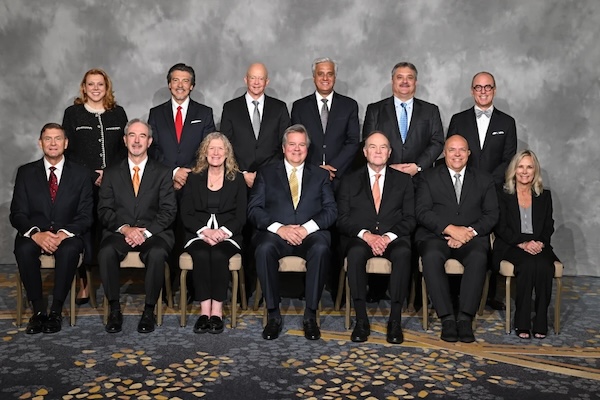
Robert S. Clark, DMD, was introduced as the 2025-26 President of the American Association of Oral and Maxillofacial Surgeons (AAOMS) during its Annual Meeting in Washington, D.C., in September.
With AAOMS’s other officers and Board of Trustees, Dr. Clark assumes leadership of the professional organization representing more than 9,000 oral and maxillofacial surgeons. Dr. Clark, of Lexington, Ky., served as President-Elect and Vice President, each for a year, as well as AAOMS Treasurer for four years and District III Trustee for four years. An ABOMS Diplomate, he served on the board’s Oral Examination Committee for seven years and is a past President of the Kentucky Society of Oral and Maxillofacial Surgeons. He is a partner at the Kentucky Center for Oral and Maxillofacial Surgery in Lexington and a founding partner and board member of OMS360, based in Cumming, Ga.
Dr. Clark received his Doctor of Dental Medicine degree from the University of Kentucky College of Dentistry – graduating with high distinction. He received the Alpha Omega Award and was inducted into the Omicron Kappa Upsilon Honor Society. He completed his oral and maxillofacial surgery residency at the University of Texas Southwestern Medical Center/Parkland Memorial Hospital.
“I am honored to present my theme for this year as your AAOMS President: Together We Thrive – Celebrating Family and Our AAOMS Community,” Dr. Clark said in his Inaugural Address to the AAOMS House of Delegates. “Together, we have the power to thrive and shape the future of our specialty. Let’s move forward as one united community, embracing the diversity within our ranks and celebrating the strength that comes from our shared commitment to excellence.”
Dr. Clark succeeds J. David Morrison, DMD, of Loveland, Ohio, who will serve as Immediate Past President. Other 2025-26 officers elected by the House of Delegates are President-Elect Charles A. Crago, DMD, MD, FACS; Vice President Debra M. Sacco, DMD, MD; Treasurer Jeffrey H. Wallen, DDS; and Speaker of the House Steven R. Nelson, DDS, MS.
In addition, Pushkar Mehra, DMD, BDS, FACS, and Daniel J. Gesek Jr., DMD, join the Board as Trustees in District I and District III, respectively. They replace Edward J. Miller, DMD, and Dr. Sacco, whose two-year terms expired. W. Frederick Stephens, DDS, District VI, was re-elected to his second two-year term.
Dr. Crago, of Deep River, Conn., served six years as District V Trustee and in the AAOMS House of Delegates for over 25 years. In addition, he was District V Caucus Chair and has served on a variety of AAOMS committees. He retired in 2024 after 40 years of private practice as the managing partner of a seven-doctor, five-office oral and maxillofacial surgery practice that served most of North Dakota. He also served as President of the state societies of New Mexico and North Dakota, was President of the Southwest Society of Oral and Maxillofacial Surgeons and has been an ABOMS Diplomate since 1988.
Dr. Sacco, of Chapel Hill, N.C., served six years as Trustee for District III. Before her time as Trustee, she served as a Delegate for North Carolina, was a member and Chair of numerous AAOMS committees and was a member of the first ROAAOMS executive committee. In addition to her service with AAOMS, Dr. Sacco was an examiner for ABOMS, a member of the claims committee for OMSNIC and a mentor with the Osteo Science Foundation.
Dr. Nelson, of Denver, Colo., was elected to his 24th term as Speaker of the House and received AAOMS’s Presidential Achievement Award in 2022. He is a member of the Rocky Mountain Hospital for Children’s Cleft Palate and Craniofacial Center team and in private practice at Nelson & Wells Oral and Maxillofacial Surgery in Denver. He served on the board of the Colorado Dental Association and for many years was President for the Colorado Dental Lifeline Network where he remains an active volunteer.
Dr. Wallen, of Myrtle Beach, S.C., was first elected treasurer in 2023 and has served the profession in numerous capacities, including past President of the Southeastern Society of Oral and Maxillofacial Surgeons and the South Carolina Society of Oral and Maxillofacial Surgeons, Alternate Delegate and Secretary of the District III Caucus and a member of the Committee on Public and Professional Communications. In addition, he is past Chair of OMSPAC and has served on the Committee on Governmental Affairs. Dr. Wallen started a private practice in Myrtle Beach, and has practiced there for the past 30 years.
Dr. Mehra, of Boston, Mass., is Chief of Oral and Maxillofacial Surgery at Boston Medical Center and Professor and Chair of Oral and Maxillofacial Surgery at Boston University Henry M. Goldman School of Dental Medicine. He has represented Massachusetts as an AAOMS Delegate since 2009 and serves as a Consultant to the Commission on Dental Accreditation. A past president of both the American Board of Oral and Maxillofacial Surgery and the Massachusetts Society of Oral and Maxillofacial Surgeons, Dr. Mehra has authored three textbooks, published extensively in medical and dental literature and is a frequent invited speaker at international professional meetings.
Dr. Gesek, of Jacksonville, Fla., has served in the AAOMS House of Delegates for over 20 years, including as caucus chair for District 3. He spent eight years on the AAOMS Committee on Anesthesia, chairing it in 2011–12, and contributed to the Simulation Committee from 2012–15. He currently serves on the Committee on Constitution and Bylaws, the Committee on Governmental Affairs and the ADA Liaison Committee. In 2019, he was President of the Florida Society of Oral and Maxillofacial Surgeons. His leadership roles also include Chair of the Florida Board of Dentistry (2012–13), service on the ADA Council on Dental Education and Licensure, and membership on the American Board of Oral and Maxillofacial Surgery Exam Committee. He is President-Elect of the Florida Dental Association and sits on the Board of Directors for the Florida Prescription Drug Monitoring Foundation.
Other Trustees are Martin E. Eichner, DDS, District II, of Monroeville, Pa.; Gregory M. Ness, DDS, FACS, District IV, of Worthington, Ohio; and Julia R. Plevnia, DDS, FACS, District V, of Parker, Colo. The Board also includes Secretary/Executive Director Karin Wittich, CAE.
Thanks to our Outstanding FSOMS Delegation
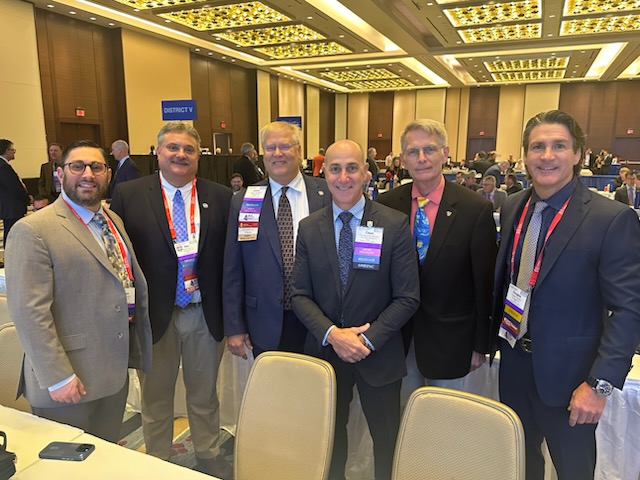
Drs. Jason Portnof, Dan Gesek, Lance Grenevicki, Chad Marshall, Tom Bowers
and Douglas Johnson.
Valuable Coding and Reimbursement Resources!
Dear State OMS Society Executive Directors and Presidents:
Please find attached a letter from the chair of the AAOMS Committee on Healthcare Policy, Coding and Reimbursement. Please do not hesitate to reach out with any questions! Thank you!
Sandy Guenther
Director, State Government Affairs
American Association of Oral and Maxillofacial Surgeons
9700 W. Bryn Mawr Ave., Rosemont, IL 60018
Office: 800-822-6637, ext. 4388 | Fax: 847-678-4619
sguenther@aaoms.org | AAOMS.org | MyOMS.org